
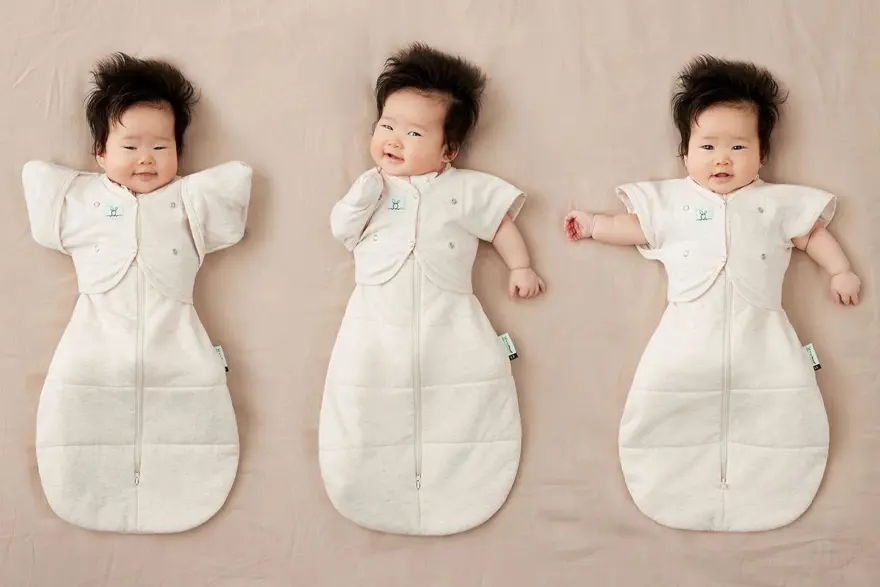
Getting a new baby to sleep can feel a little scary and overwhelming the first time round. There's a lot to figure out: timing, temperature, what they're wearing, where they're sleeping, all while trying to follow safer sleep guidance on top of it. We've broken down the key things worth knowing about swaddling and temperature, to help everyone get a better night's sleep as the seasons change.
The Science Behind Swaddling
Swaddling is the practice of securely wrapping a baby in a blanket, wrap or zip-up swaddle to help them feel secure and settled for sleep. It works by preventing the sudden flailing of arms and head, known as the startle reflex, that can snap a sleeping baby awake. This reflex is a jerk in the body that can occur every twenty minutes in some babies, and it's completely normal, beginning in the first trimester in the womb.
Always use breathable fabrics, like organic cotton, and never swaddle too tightly, leaving plenty of room at the hips for healthy movement. The Lullaby Trust has excellent guidance on safer sleep practices, including when to stop swaddling altogether, generally as soon as a baby shows any sign of trying to roll.
Why Swaddle Arms In?
Swaddling a baby's arms in is the classic approach, mimicking the snug feeling of the womb and preventing those sudden startle reflexes that can wake your baby. It's usually the first style parents are shown, and it works well for the early weeks while the startle reflex is at its strongest.
💡 Cubbi Tip: The ergoPouch Cocoon Swaddle Bag is a perfect, easy-to-use solution for this style. It gently wraps your baby's arms inside, keeping them cosy and secure for those first few weeks, grab 20% off ergoPouch on Cubbi.
What Is an Arms-Up Swaddle?
An arms-up swaddle supports a baby's arms in a raised position near their face, rather than pinning them fully to their sides. It suits babies who resist a full swaddle or want their hands close by.
💡 Cubbi Tip: This is where the ergoPouch Butterfly Cardi really shines. Designed with a "hands up" option, it lets your baby keep their arms close to their face, offering comfort without full restriction. You can simply wear it over the Cocoon Swaddle Bag to gently help your baby adjust from arms in to arms out sleeping.
What Are the Benefits of Arms-Up Swaddling vs Arms-Down?
Arms-down swaddling gives the classic, fully contained womb-like feeling and suits newborns with a strong startle reflex. Arms-up swaddling keeps hands free near the face, better suited to slightly older babies who are starting to self-soothe or resist being fully wrapped.
Is It Safe to Swaddle a Baby With Their Arms Up?
Yes, provided the swaddle stays snug around the chest and hips and baby sleeps on their back. As with any swaddle, stop as soon as your baby shows signs of rolling.
Why Do Some Babies Prefer Arms Up When Sleeping?
It comes down to self-soothing. Some babies settle more easily with their hands near their face or mouth, something a fully arms-in swaddle doesn't allow.
How Do Arms-Out Transition Swaddles Help Babies Adjust?
A transition swaddle, worn over a normal swaddle with one or both arms free, eases a baby from a full swaddle into sleeping without one, rather than stopping in one go.
How and When to Swaddle With Arms Out
Most parents introduce arms out as the startle reflex begins to fade, often around 2 to 3 months. Keep the swaddle snug across the chest, leave room at the hips, and always place baby on their back to sleep.
Swaddles and Sleep Bags Or Blankets
Some parents find it easier using swaddle bags with zips and poppers, particularly for those easy nighttime changes, but it can also be done with a tightly wrapped blanket if that's what works for your baby. Either way, the aim is the same: a secure, contained feel without anything loose that could move during the night.
💡 Cubbi Tip: If you're a swaddling pro, a soft cellular blanket is perfect for the job. Get a gorgeous range with 10% off on Cubbi at Mabel & Fox.
TOG Ratings Made Simple
When it comes to baby sleep, what matters most is the temperature of the room, not the time of year. Many UK homes sit within the commonly referenced 16 to 20°C range, especially with heating on overnight, so a simple room thermometer is genuinely useful for dressing baby based on actual conditions rather than how cold it feels outside.
TOG ratings help match sleepwear to that room temperature: the higher the TOG, the warmer the garment, and the lower the TOG, the lighter. Treat it as a helpful starting point rather than a one-size-fits-all rule, and adjust from there based on how your baby actually seems.
💡 Cubbi Tip: For an easy read on room temperature, plus a night light for those 2am checks, the Tommee Tippee Gro-egg is a genuinely useful bit of kit, grab 20% off Tommee Tippee on Cubbi.
Check out the ergoPouch TOG guide for changing weather, it's a handy reference as the seasons shift.
For Expert Advice and More Information
Sleep safety is paramount. Safer sleep guidance advises keeping a baby's sleep space clear, with no loose blankets or layers that could shift during the night. For comprehensive, trusted guidance on keeping your baby safer during sleep, The Lullaby Trust is an excellent place to start. To dive deeper into swaddling techniques and find out when to transition to a sleeping bag, check out ergoPouch's swaddling guide for trusted information on making the best choice for your child's sleep.
Last updated: 22 September 2026